On Doubt
Reflections on Skepticism

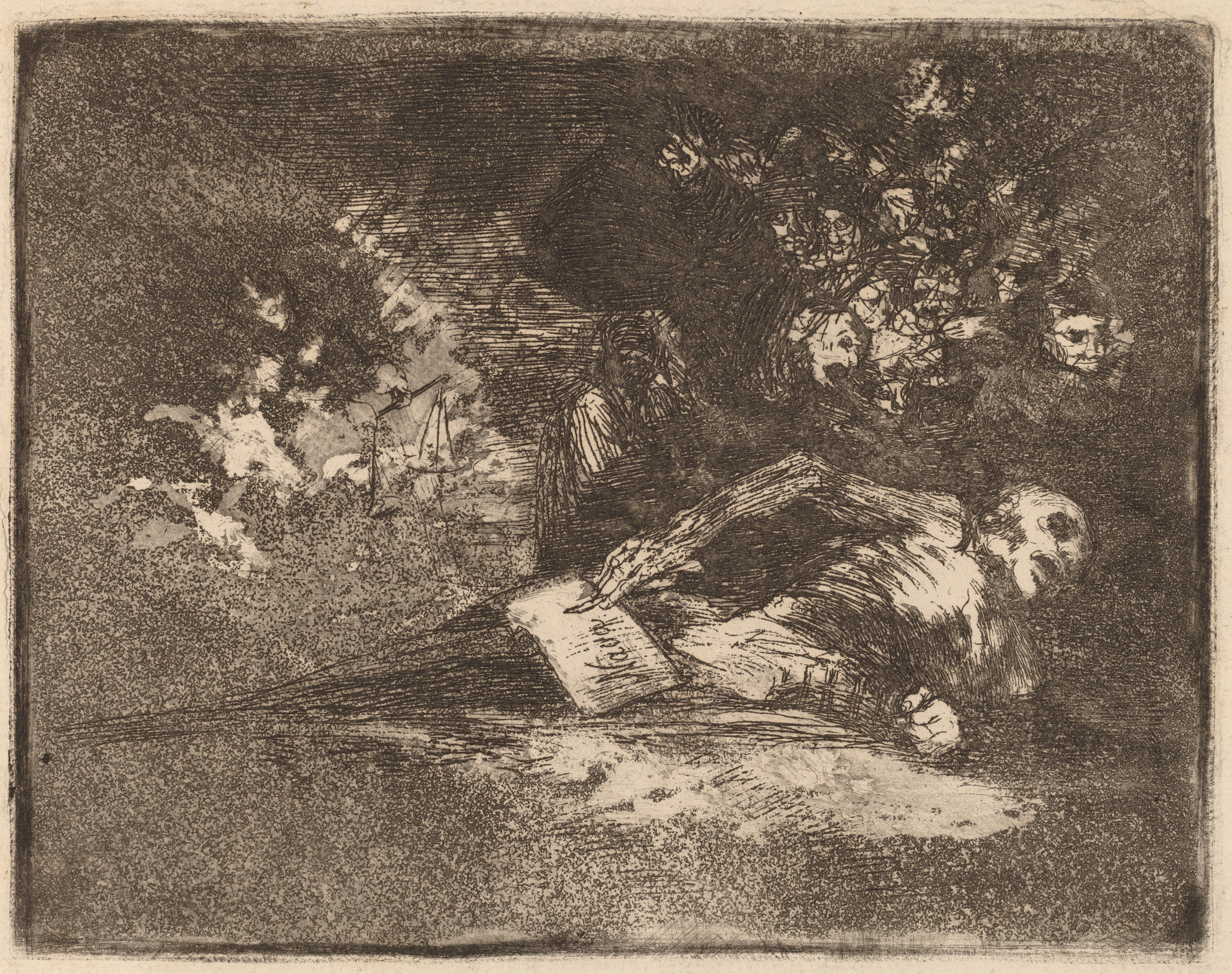
“All presentations are false; absolutely nothing true exists in the world.”
The question: what is the place of skepticism in philosophy?
In antiquity, Skepticism was the name of a school, a living tradition of philosophical teaching aimed at the attainment of tranquility through the relinquishment of all of one’s beliefs. This school was particularly popular among practitioners of medicine who found the search for hidden causes and dogmatic adherence to textual sources which characterized rival medical schools antithetical to the practical art of curing disease and healing wounds.
While many speculate about eastern—and specifically Buddhist—origins of the Pyrrhonist school, in their own self-conception they took the atomist philosopher Democritus as their intellectual forebearer. For Democritus, there was an unbridgeable gap between appearance and reality; the world of the senses was a world which gave the illusion of generation and corruption, of smell and color, of bodies and change. In this regard, ancient skepticism thus can be accounted for in the shared insistence that there is nothing real or stable behind appearances—there are no hidden structures which ground the succession of appearances.
Ancient skepticism, despite its initial presentation as an epistemic doctrine, actually reveals its true nature as both ethical and metaphysical. Epistemological arguments are meant to disabuse the audience of their reliance on hidden causes and, with these illusions stripped away, will be thus able to live a life free from the anguishes brought about by one’s own metaphysical hubris. What is left is thus sense-certainty.
Viewed in light of this, Skepticism is thus one philosophical configuration among many. Like all schools in antiquity, distinctive doctrines and practices distinguish it from rival camps, but to the uninitiated it nevertheless was but one live option among many. Skepticism, as a living practice rooted in a particular intellectual lineage, constituted something like a wisdom tradition passed down from sage to student, differing only in degrees from the rival camps with which it so radically sought to break.
From this point, a further distinction can be made. The lived tradition of Skepticism adhered to the social form typical of Late Antiquity, marked as it were by the necessary conditions into which it was to coalesce. Skepticism as a school is thus constrained by the historical reality of its given moment and it should thus come as no surprise that attempts to revive a given historical epoch will likewise give rise to a revived shadow-form of the Skeptical school as well, such as in the Renaissance skepticism of Francisco Sanches. The alternative, therefore, consists in an attempt to distill the distinctive features of Skepticism as a school into what can be termed the skeptical attitude.
This designation of the skeptical attitude signifies the separation of the skeptic from its given historical determination. The skeptical attitude, rather than being relegated to a peculiar philosophical school, now permeates the entire historical trajectory of ancient philosophy. We can speak about skeptical attitudes of the pre-Socratics and Sophists, Socratic skepticism and its successors in the Platonic Academy, and even skeptical themes as they crop up in some of the most dogmatic philosophical schools. This is possible because the skeptical attitude revolts against all attempts to take the apparent as self-evident (i.e., appearance as the sole criterion of truth) just as much as it rejects all attempts at grounding appearance in some more fundamental reality (i.e., appearance as the basis of some further insight beyond the merely apparent).
In short, the skeptical attitude is thus understood as a mode of thinking which takes on a particular trajectory. First, skepticism is a disposition: the embrace of doubt. Doubt can only be possible where there is a gap between the subject and that which is known, and the skeptical attitude operates by either exploiting existing topological uncertainties in that interim space or, more radically, forcibly intervening to insert a gap between the two. As such, the second phase is that of the adoption of uncertainty. The skeptic’s rival, the dogmatist, insists upon the possibility of real knowledge with absolute certainty so, accordingly, the skeptical attitude thus casts itself as the blade which cuts through all webs of illusion, the roaring lion which dissolves all human categories. Finally, the third and final component of the motion is that of suspension—the resolving action of the skeptical attitude which entrenches the gap between subject and knowledge as real. In total, the skeptical attitude is one which seeks to establish an inescapable gap between the subject and knowledge, not just in a particular domain but in all possible instances.
It is in this final flourish that the skeptical attitude risks conceptual collapse. A fork in the road is presented: either nothing can be known (acatalepsia), in which case the skeptic runs the risk of either dogmatism or self-contradiction, or the universal suspension of judgement, which sees the subject fully retreating into itself and severing the golden thread between self and world. The Skeptical school was able to assuage this—and perhaps even resolve the contradiction, if one is feeling sympathetic to their project—through the entrenchment of the skeptical attitude in a lived practice and confirmed through the sagacious self-restraint attained by the school’s founder. But in modernity, birthed out of the skeptical rejection of tradition, this option is no longer on the table. As such, the place of the skeptical attitude in modernity poses both a perennial appeal and an enduring problem that must be examined in some detail.
Modernity conceives of the subject’s relation to knowledge as something like an orbital oscillation. The perihelion—dogmatism; the aphelion—skepticism. The closure of the gap is unthinkable, but so too is the subject’s ejection into the interstellar space of absolute nihilism. The attraction of the knowable object is always too strong to escape, yet its centrifugal force keeps us ever at bay. Humanity is consigned to the periphery of intelligibility, neither inhabiting the world as a fully present subject nor able to enter into a purely transcendental standpoint.
The theological tinge of all this is inescapable and, to be quite frank, has often struck me as nauseatingly blatant. Born out of the medieval insistence upon divine transcendence and the impossibility of an immediate intellectual assimilation of the first principle, the world itself now transcends the subject. The radical alterity of God and world passes first through fideism before relegating itself to mere skepticism.
The skeptical attitude, in its attempt to avoid its conceptual subsumption into a dogmatic refusal of knowledge, instead positions itself as a simple and universal orientation of doubt. Doubt, rather than fidelity, is the move which initiates the modern subject into philosophy itself; it is through the initial movement of doubt that philosophy begins in earnest. Dogmatism is the child’s domain; all philosophy thus insists that it cuts through the illusions which dominate the minds of the masses.
The great irony of all this is that all dogmas thus now claim to be founded on the skeptical attitude. The naturalist just as much as the idealist appeals to the great twin illusions of modernity—God and the machine—as the basis for a skeptical rejection of the established order. All skeptics claim to take aim at the swarms of superstitions haunting the minds of human beings, yet in doing so seem only to reaffirm the dogmatisms they embrace with open arms. There is no puzzle here: if skepticism closes off the knowable world from the thinking subject, all attempts to ground certainty can only be found in the subject’s own convictions. That is to say, rather than disclosing a new form of subjectivity freed from illusions, the skeptic merely returns to the point of origin having done little more than completing another epistemic rotation.
Modernity’s last gasp, postmodernity, was little more than the reification of this skeptical oscillation into a conceptual absolute. At the end of history, the ascendancy of the skeptical attitude was little more than naked tyranny, but now, from our current vantage point, it is instead revealed as a certain tendency finally contracting back into itself after fully working itself to completion.
Philosophy, if it seeks to live in the present moment, can only ground itself on the recognition that dogmatism, not skepticism, must serve as its fundamental orientation. To declare that one can know with absolute certainty is the insistence that thinking is not confined within the golden prison of subjectivity, that the evasiveness of the real can be overcome, and that the many illusions which torment us are banished not through a retreat into a pristine inner world, but through lived sensuous activity taking the form of incantation and ritual.